Easy Angel Food Cake Recipe From Scratch
Remember that perfect slice of airy, light cake that melts in your mouth? Making angel food cake from scratch can seem tricky, but it doesn’t have to be. You might have tried store-bought versions or complicated recipes that left you with a dense, eggy mess.
This guide is here to change that, showing you just how simple it is to achieve that heavenly texture and delicate flavor in your own kitchen. We’ll walk through each step, ensuring your angel food cake recipe from scratch turns out beautifully every time. Get ready to impress yourself and your loved ones with a truly homemade treat.
Key Takeaways
- You will learn the essential ingredients for a light and airy angel food cake.
- Understand the importance of proper egg white preparation for maximum volume.
- Discover techniques for gently folding ingredients to maintain cake’s structure.
- Get tips on baking and cooling for the perfect texture and appearance.
- Find answers to common questions about making angel food cake from scratch.
The Magic of an Angel Food Cake Recipe From Scratch
Creating an angel food cake from scratch is a delightful culinary adventure that results in a cake like no other. Its signature characteristic is its incredibly light and airy texture, achieved by using primarily egg whites, sugar, and flour. Unlike heavier cakes, angel food cake relies on the air whipped into the egg whites for its structure and lift.
This makes it a fantastic base for fresh fruits, light sauces, or simply a dusting of powdered sugar. Mastering this angel food cake recipe from scratch will open up a world of elegant dessert possibilities.
The key to this cake’s ethereal quality lies in its simplicity and the careful handling of its ingredients. We will break down the process into manageable steps. You’ll gain a deep appreciation for how a few basic pantry staples can transform into something so wonderfully delicate.
Prepare to be amazed by the beautiful, cloud-like cake you can create with a little guidance and patience. This guide is designed to make the process accessible, even for novice bakers.
Essential Ingredients for Airy Perfection
The foundation of any great angel food cake recipe from scratch is a well-chosen set of ingredients. Unlike butter cakes, angel food cake contains no fat, which is crucial for its characteristic lightness. The primary components are cake flour, granulated sugar, egg whites, cream of tartar, and flavorings like vanilla extract and almond extract.
Each ingredient plays a specific role in achieving that perfect texture.
Cake flour is preferred because it has a lower protein content than all-purpose flour. Lower protein means less gluten development, which prevents the cake from becoming tough. Granulated sugar not only sweetens the cake but also helps to stabilize the egg whites, creating a fine, glossy meringue.
Egg whites are the star; they provide the structure and volume when whipped. Cream of tartar, an acidic salt, acts as a stabilizer for the egg whites. It helps them whip up faster and achieve a greater volume, preventing them from collapsing.
Vanilla and almond extracts add a delicate fragrance and flavor that complements the cake’s subtle sweetness. Salt is also often included in small amounts to enhance the overall flavor profile.
- Cake Flour: This is non-negotiable for a tender crumb. Its lower protein content means less gluten forms. Less gluten results in a softer, more delicate cake texture that is essential for angel food cake. All-purpose flour can be used in a pinch, but you must remove some of the gluten by sifting it multiple times or using a whisk to aerate it thoroughly before measuring.
- Granulated Sugar: It provides sweetness and helps create a stable meringue. A portion of the sugar is mixed directly with the egg whites while whipping, and the remainder is gradually added. This gradual addition helps dissolve the sugar without deflating the egg whites, creating a strong yet flexible structure for the cake.
- Egg Whites: These are the backbone of angel food cake. They must be at room temperature for maximum volume when whipped. Cold egg whites are harder to whip into a stable foam. Ensure absolutely no yolk contaminates the whites, as fat inhibits their ability to whip properly. A clean bowl and whisk are also vital.
- Cream of Tartar: This acidic powder is a powerful stabilizer for egg whites. It helps the proteins in the egg whites to bond more effectively as they are whipped. This leads to a more voluminous and stable foam that is less likely to collapse during baking. Without it, your cake might be dense and short.
- Flavorings: Vanilla extract and almond extract are classic choices. They add a subtle, beautiful aroma and taste that elevates the cake. Some recipes might also include a hint of lemon or orange zest for a brighter flavor. Use good quality extracts for the best results.
- Salt: A small pinch of salt is essential to balance the sweetness and enhance the overall flavor of the cake. It prevents the cake from tasting bland and helps to bring out the delicate nuances of the other ingredients.
The Art of Whipping Egg Whites
The most critical step in making a successful angel food cake recipe from scratch is properly whipping the egg whites. This process incorporates air, which is what gives the cake its signature lift and feather-light texture. It requires patience and the right technique.
Start with egg whites that are at room temperature. They whip up to a greater volume and create a more stable foam than cold egg whites. It’s also crucial that your mixing bowl and whisk are impeccably clean and free of any grease or fat, as even a tiny amount of fat can prevent the egg whites from whipping properly.
Begin whipping the egg whites on medium speed until they become foamy. At this stage, add the cream of tartar and a small amount of salt. Continue whipping, gradually increasing the speed.
As the egg whites start to become opaque and soft peaks form (meaning the peaks curl over when the whisk is lifted), begin to slowly add the granulated sugar, a tablespoon at a time. This gradual addition is key. It allows the sugar to dissolve and helps to create a strong, glossy meringue that holds its shape.
Don’t rush this process; it takes time.
You are looking for stiff, glossy peaks. This means that when you lift the whisk, the peaks stand straight up without curling. The meringue should look smooth and shiny, not curdled or grainy.
If you overbeat the egg whites, they can become dry and clumpy, which will negatively affect the cake’s texture. If you underbeat them, the cake will not have enough volume. It’s a delicate balance, but practicing will help you learn to recognize the perfect consistency.
This stable foam is the foundation upon which your angel food cake will be built.
Gently Folding Your Way to Lightness
Once you have achieved perfectly whipped egg whites, the next crucial step is to gently fold in the dry ingredients. This is where the “angelic” lightness is preserved. Folding is a technique that combines ingredients without deflating the air that has been so carefully incorporated into the egg whites.
You’ll want to sift the cake flour and the remaining sugar together multiple times before you begin. This aerates the flour and sugar, making them lighter and ensuring they are well combined. Aim for at least 3 to 5 siftings.
To fold, use a large rubber spatula. Add about a quarter of the dry ingredient mixture to the whipped egg whites. Then, using the spatula, gently cut down through the center of the mixture, then sweep across the bottom of the bowl and up the side.
Rotate the bowl as you go. The goal is to gently lift the batter from the bottom and fold it over the egg whites, incorporating them with minimal loss of air. Do not stir or beat the mixture; this will deflate your beautiful meringue.
Continue adding the dry ingredients in small additions, folding gently after each addition, until everything is just combined. You should see no streaks of dry flour. It’s important not to overmix.
Overmixing will develop gluten in the flour and knock out the air, resulting in a dense, heavy cake. The batter should look light, airy, and smooth. The folding technique is essential for maintaining the cake’s structure and ensuring it bakes up light and fluffy.
This careful incorporation of dry into wet is what makes an angel food cake so uniquely delicate.
Baking and Cooling for Ultimate Texture
Baking an angel food cake recipe from scratch requires specific attention to temperature and time, and the cooling process is just as important. Angel food cakes are typically baked in a specific type of pan called an angel food cake pan, which has a hollow center tube and is usually ungreased. The tube helps the cake bake more evenly by allowing heat to circulate through the center.
The ungreased surface is vital because the cake batter needs to cling to the sides of the pan to hold its structure as it rises and bakes.
Bake the cake in a preheated oven, usually at a moderate temperature like 325-350°F (160-175°C). The baking time can vary depending on the size of your pan and your oven, but it typically ranges from 35 to 45 minutes. You’ll know the cake is done when the top is golden brown and springs back lightly when touched.
A wooden skewer or toothpick inserted into the center should come out clean. Avoid opening the oven door too frequently during baking, as this can cause the cake to collapse.
The cooling process is critical for preventing the cake from sinking. Immediately after taking the cake out of the oven, invert the pan. This is usually done by placing the pan upside down on its neck or by using the pan’s built-in legs if it has them.
This allows gravity to help set the cake’s structure, preventing it from collapsing on itself as it cools. Let the cake cool completely upside down, which can take 1 to 2 hours. Once fully cooled, you can run a thin knife or offset spatula around the edges of the pan to release the cake.
- Pan Preparation: Never grease an angel food cake pan. The batter needs to adhere to the sides to climb and maintain its height. The tube in the center helps ensure even cooking.
- Baking Temperature and Time: A moderate oven temperature (325-350°F or 160-175°C) is ideal. Baking too hot can cause the outside to brown too quickly while the inside remains raw. Baking time is usually 35-45 minutes, but always check for doneness.
- Inverting for Cooling: This is perhaps the most crucial step for a successful angel food cake. Inverting the pan prevents the cake from compacting under its own weight as it cools, preserving its airy structure.
- Complete Cooling: Ensure the cake is entirely cool before attempting to remove it from the pan. A warm cake is fragile and more likely to break or tear. Patience here is rewarded with a perfect cake.
Serving and Storing Your Angel Food Creation
Once your beautiful angel food cake recipe from scratch has been baked and cooled, the best part is enjoying it! Angel food cake is wonderfully versatile. Its light, sweet flavor makes it a perfect companion for a variety of accompaniments.
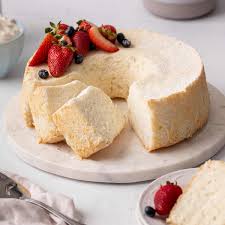
Fresh berries are a classic pairing, offering a burst of natural sweetness and a lovely color contrast. A dollop of lightly sweetened whipped cream or a swirl of crème fraîche also complements its delicate texture beautifully. For a more decadent touch, consider a fruit coulis or a light lemon curd.
When serving, use a serrated knife for a clean cut, as the cake is very delicate. Slice it gently to avoid crushing the airy interior. Angel food cake is best enjoyed fresh, within a day or two of baking.
If you need to store it, keep it at room temperature in an airtight container. Avoid refrigerating it, as this can dry out the cake and make it tough. If you have any leftover cake, you can also repurpose it.
Cubed angel food cake makes a fantastic base for trifles or can be toasted and served with fruit and yogurt for a light breakfast or dessert.
Real-Life Example: A Birthday Surprise
Sarah wanted to bake a special birthday cake for her daughter, Lily, who loved light and airy desserts. Sarah had always been intimidated by angel food cake, fearing it would be too difficult. She found our angel food cake recipe from scratch and decided to give it a try.
Following the instructions carefully, she paid close attention to whipping the egg whites until they formed stiff, glossy peaks and then gently folding in the dry ingredients. She baked it in her standard tube pan and inverted it to cool.
When Lily saw the cake, she was delighted by its height and pristine white appearance. The cake was incredibly light, with a melt-in-your-mouth texture that was exactly what Sarah had hoped for. Lily’s friends all commented on how delicious and “cloud-like” it was.
Sarah felt a huge sense of accomplishment, realizing that with clear instructions and a little patience, she could create impressive desserts at home. The success of this cake boosted her confidence, and she now makes it regularly.
Common Myths Debunked
Myth 1 Angel Food Cake is Too Difficult for Beginners
This is a common misconception. While it requires careful technique, an angel food cake recipe from scratch is very achievable for beginners. The key lies in understanding the role of each ingredient and mastering gentle folding.
With clear instructions and patience, anyone can bake a successful angel food cake.
Myth 2 You Must Use A Special Angel Food Cake Pan
While an angel food cake pan with a central tube and legs is ideal, it’s not strictly mandatory. A standard tube pan can work, and you can improvise cooling by inverting it over a bottle or sturdy mug. However, the ungreased surface is essential for the cake to grip and rise.
Myth 3 You Can Substitute All-Purpose Flour for Cake Flour
While you can make substitutions, it’s not ideal for the best result. Cake flour’s lower protein content is crucial for angel food cake’s tender, airy crumb. If you must use all-purpose flour, sifting it multiple times or whisking it thoroughly before measuring can help reduce gluten development and improve texture, but cake flour remains superior.
Myth 4 Overmixing Is Fine Because It Ensures Everything Is Combined
Overmixing is detrimental to angel food cake. It develops the gluten in the flour too much, leading to a tough, dense cake, and it deflates the air whipped into the egg whites. Gentle folding is paramount to preserving the cake’s lightness and airy structure.
Frequently Asked Questions
Question: Why is my angel food cake dense and heavy
Answer: This is usually due to overmixing the batter after adding the dry ingredients, deflating the whipped egg whites, or not whipping the egg whites to stiff peaks. Ensuring a clean bowl and no yolk in the whites is also critical for volume.
Question: What is the best way to tell if angel food cake is done
Answer: The cake should be golden brown on top and spring back lightly when gently pressed. A wooden skewer or toothpick inserted into the center should come out clean, with no wet batter attached.
Question: Can I use a stand mixer for whipping egg whites
Answer: Yes, a stand mixer is excellent for whipping egg whites. It allows for continuous beating and gradual addition of sugar, helping you achieve stiff, glossy peaks efficiently. Just ensure the bowl and whisk are perfectly clean.
Question: My angel food cake sank in the middle after cooling
Answer: This usually happens if the cake was not cooled properly. It must be inverted immediately after baking and cooled completely upside down to allow the structure to set. Opening the oven door too early during baking can also cause it to sink.
Question: How long does angel food cake last
Answer: Angel food cake is best enjoyed fresh, within 1-2 days. Store it at room temperature in an airtight container. Refrigeration can dry it out and make it tough.
Conclusion
Creating a perfect angel food cake recipe from scratch is within your reach. Focus on room temperature egg whites, gentle folding, and proper cooling. This classic dessert proves that simple ingredients, handled with care, can result in something truly magical.
Enjoy your light, airy, and delicious homemade angel food cake!

Related Posts
Filipino Food for the Gods Recipe Easy Guide

Exploring Local D Food Collabs In Dalton GA